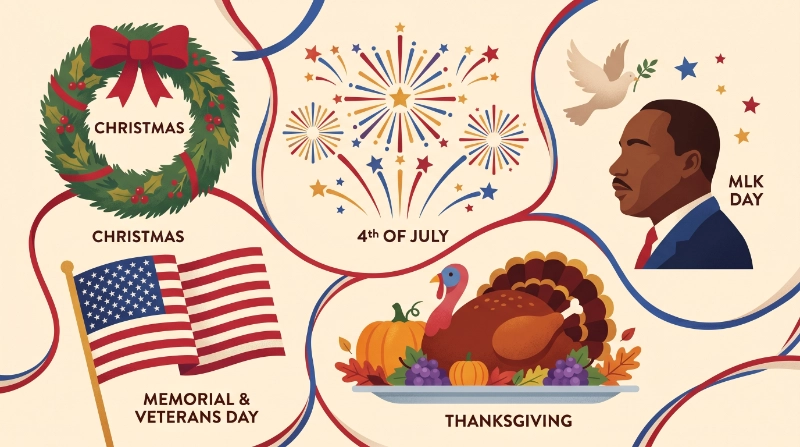
The United States observes 11 federal holidays that honor key moments and values in American history. The most-tested on the citizenship exam are Independence Day (July 4), Thanksgiving (4th Thursday of November), and Memorial Day (last Monday of May).
11 federal holidays:
- New Year's Day — January 1
- Martin Luther King Jr. Day — 3rd Monday in January
- Presidents' Day — 3rd Monday in February
- Memorial Day — last Monday in May
- Juneteenth — June 19
- Independence Day — July 4
- Labor Day — 1st Monday in September
- Columbus Day / Indigenous Peoples' Day — 2nd Monday in October
- Veterans Day — November 11
- Thanksgiving — 4th Thursday in November
- Christmas Day — December 25
The National Holidays
The United States has 11 federal holidays. On these days, federal government offices and many businesses are closed.
New Year's Day — January 1
Celebrates the start of a new year.
Martin Luther King Jr. Day — Third Monday in January
Honors Dr. Martin Luther King Jr., the civil rights leader who fought for racial equality through nonviolent protest. He was born on January 15, 1929.
Presidents' Day — Third Monday in February
Honors all U.S. Presidents, originally celebrated on George Washington's birthday (February 22). Also associated with Abraham Lincoln's birthday (February 12).
Memorial Day — Last Monday in May
Honors military members who died in service to the country. It is a day of remembrance, not celebration. Many Americans visit cemeteries and memorials.
Note: Memorial Day is different from Veterans Day. Memorial Day honors those who died; Veterans Day honors all who served.
Independence Day — July 4
Celebrates the adoption of the Declaration of Independence on July 4, 1776 — the birthday of the United States as a free nation. Marked with fireworks, parades, and barbecues.
Labor Day — First Monday in September
Honors American workers and the labor movement. It also marks the unofficial end of summer.
Columbus Day — Second Monday in October
Traditionally honors Christopher Columbus's arrival in the Americas in 1492. Some states and cities celebrate Indigenous Peoples' Day instead, honoring Native Americans.
Veterans Day — November 11
Honors all people who have served in the U.S. military (living and deceased). November 11 was chosen because World War I ended on that date in 1918.
Thanksgiving — Fourth Thursday in November
Celebrates the harvest and gives thanks. The tradition is traced to the 1621 feast between Pilgrims and the Wampanoag people in Plymouth, Massachusetts.
Christmas Day — December 25
Celebrates the Christian holiday of the birth of Jesus Christ. Widely observed as a cultural holiday by Americans of all backgrounds.
Holidays Most Likely on the Test
The citizenship test focuses on two holidays and their meanings:
Independence Day
Q: When do we celebrate Independence Day? A: July 4
Q: Why do we celebrate Independence Day? A: Because the Declaration of Independence was adopted on July 4, 1776 / because the colonies declared independence from Britain
Thanksgiving
Q: Why do we celebrate Thanksgiving? A: Because the Pilgrims celebrated the harvest with Native Americans / to give thanks
Other Holiday Questions
Q: Name two national U.S. holidays. A: (Any two from the list above)
The Meaning Behind the Holidays
What makes American holidays distinctive is that many celebrate ideas and principles rather than religious events or monarchs:
- Independence Day — freedom and self-governance
- Memorial Day / Veterans Day — sacrifice and service
- Martin Luther King Jr. Day — equality and justice
- Presidents' Day — democratic leadership
- Labor Day — the dignity of work
- Thanksgiving — gratitude and community
These holidays reflect the values that define American identity.
Frequently Asked Questions
What is Independence Day?
Independence Day, celebrated on July 4, marks the adoption of the Declaration of Independence in 1776. It celebrates American independence from Great Britain with parades, fireworks, and family gatherings.
When is Thanksgiving?
Thanksgiving is celebrated on the fourth Thursday of November. It honors the 1621 harvest feast shared by the Pilgrims and Wampanoag people and is a day for family meals and gratitude.
What is Memorial Day?
Memorial Day, observed on the last Monday in May, honors U.S. military members who died while serving the country. It is often considered the unofficial start of summer.
What is Veterans Day?
Veterans Day, on November 11, honors all U.S. military veterans, both living and deceased. It originally marked the end of World War I, which ended on the 11th hour of the 11th day of the 11th month of 1918.
What is Juneteenth?
Juneteenth (June 19) commemorates the day in 1865 when enslaved African Americans in Texas were informed of their freedom — more than two years after the Emancipation Proclamation. It became a federal holiday in 2021.
What is the difference between Memorial Day and Veterans Day?
Memorial Day honors those who died in military service. Veterans Day honors all who have served in the U.S. military, both living and deceased.
Key Takeaways
- The U.S. has 11 federal holidays
- Independence Day (July 4) celebrates the Declaration of Independence
- Thanksgiving celebrates the harvest and gratitude — traced to the Pilgrims in 1621
- Memorial Day honors military who died; Veterans Day honors all who served
- Martin Luther King Jr. Day honors the civil rights leader
- Know at least 3-4 holidays and what they celebrate for the test