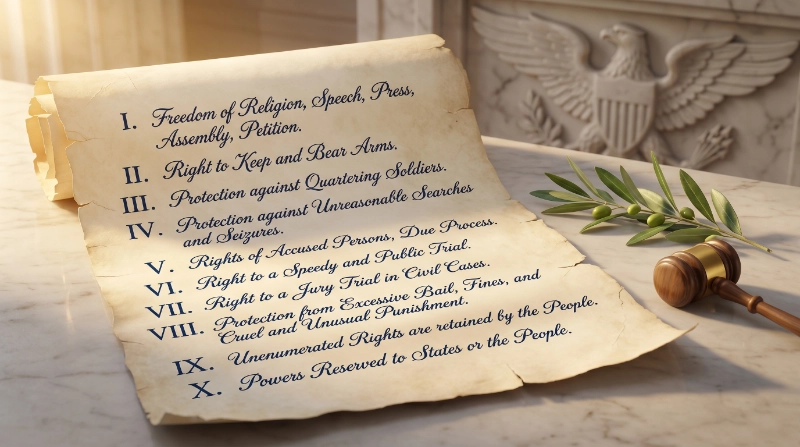
The Bill of Rights is the name for the first 10 amendments to the U.S. Constitution, added in 1791. It guarantees fundamental freedoms — including speech, religion, the press, fair trials, and protection from unreasonable searches. The citizenship test asks you to identify the Bill of Rights and name specific rights it protects.
The 10 amendments at a glance:
- 1st — Speech, religion, press, assembly, petition (5 freedoms)
- 2nd — Right to bear arms
- 4th — Protection from unreasonable searches
- 5th — Due process, no double jeopardy, no self-incrimination
- 6th — Right to a speedy public trial with a lawyer
- 8th — Protection from cruel and unusual punishment
- 10th — Powers not given to federal government belong to states or the people
Why Was the Bill of Rights Created?
After the Constitution was written, several states refused to ratify it unless protections for individual rights were added. They had just fought a revolution against a government that abused its power, and they wanted guarantees that the new government could not do the same.
James Madison wrote the Bill of Rights, drawing on ideas from state constitutions, English common law, and the Virginia Declaration of Rights.
The 10 Amendments
First Amendment — Five Freedoms
The First Amendment protects five fundamental freedoms:
- Freedom of speech — you can express your opinions without government punishment
- Freedom of religion — you can practice any religion or none at all
- Freedom of the press — newspapers and media can report without government censorship
- Freedom of assembly — you can gather peacefully with others
- Freedom to petition the government — you can ask the government to change things
This is the most commonly tested amendment on the citizenship test. You may be asked to name one or more of these rights.
Second Amendment — Right to Bear Arms
Protects the right of individuals to keep and bear arms (own firearms).
Third Amendment — Quartering of Soldiers
The government cannot force you to house soldiers in your home during peacetime. This was a direct response to British practices during colonial times.
Fourth Amendment — Search and Seizure
Protects you from unreasonable searches and seizures. The government generally needs a warrant (approved by a judge) to search your home, property, or belongings.
Fifth Amendment — Due Process
Several protections in one amendment:
- You cannot be tried twice for the same crime (double jeopardy)
- You do not have to testify against yourself (right against self-incrimination — "pleading the Fifth")
- The government must follow fair procedures before taking away your life, liberty, or property (due process)
Sixth Amendment — Right to a Fair Trial
If you are accused of a crime, you have the right to:
- A speedy and public trial
- A trial by jury
- Know the charges against you
- Have a lawyer (even if you cannot afford one)
Seventh Amendment — Civil Trial Rights
In civil cases (lawsuits between people, not criminal cases), you have the right to a jury trial if the amount in dispute exceeds $20.
Eighth Amendment — Cruel and Unusual Punishment
Prohibits excessive bail, excessive fines, and cruel and unusual punishment. This is why certain forms of punishment are considered unconstitutional.
Ninth Amendment — Rights Retained by the People
Just because a right is not listed in the Constitution does not mean it does not exist. The people retain all rights not specifically given to the government.
Tenth Amendment — Powers Reserved to the States
Any powers not given to the federal government by the Constitution are reserved to the states or the people. This is the foundation of federalism — the balance of power between national and state governments.
Rights You Should Know for the Test
The citizenship test frequently asks you to name rights protected by the Bill of Rights or the First Amendment specifically. Here are the ones that come up most often:
From the First Amendment:
- Freedom of speech
- Freedom of religion
- Freedom of the press
- Freedom of assembly
- Freedom to petition the government
From other amendments:
- Right to bear arms (Second)
- Protection from unreasonable search (Fourth)
- Right to a fair trial (Sixth)
- Protection from cruel and unusual punishment (Eighth)
Test Questions About the Bill of Rights
Q: What do we call the first ten amendments to the Constitution? A: The Bill of Rights
Q: What is one right or freedom from the First Amendment? A: Speech / religion / assembly / press / petition the government
Q: How many amendments does the Constitution have? A: 27
Frequently Asked Questions
What is the Bill of Rights?
The Bill of Rights is the first 10 amendments to the U.S. Constitution, added in 1791 to guarantee fundamental individual freedoms.
What rights does the First Amendment protect?
The First Amendment protects five freedoms: freedom of speech, freedom of religion, freedom of the press, freedom of assembly, and the freedom to petition the government.
Why was the Bill of Rights added?
Several states refused to ratify the Constitution unless individual rights protections were added. They had just fought a revolution against a government that abused its power and wanted guarantees the new government could not do the same.
Who wrote the Bill of Rights?
James Madison wrote the Bill of Rights, drawing on state constitutions, English common law, and the Virginia Declaration of Rights.
What does the Tenth Amendment do?
The Tenth Amendment reserves any powers not given to the federal government to the states or to the people. This is the foundation of federalism — the balance between national and state power.
Do I need to memorize all 10 amendments for the citizenship test?
You do not need to memorize all 10. Focus on the First Amendment (5 freedoms), the right to bear arms (2nd), protection from unreasonable searches (4th), the right to a fair trial (6th), and protection from cruel punishment (8th).
Key Takeaways
- The Bill of Rights = first 10 amendments, added in 1791
- Created because states wanted individual rights protected before ratifying the Constitution
- The First Amendment protects 5 freedoms: speech, religion, press, assembly, petition
- The Fourth Amendment protects against unreasonable searches
- The Tenth Amendment reserves powers to the states and the people
- Know at least 2-3 specific rights for the test